Erasmus+ KA1
2024-2026
"Inclusion and digital litteracy through the School Library"
Through this Erasmus project, we aim to enhance the quality of education by integrating digital practices into the school library and fostering inclusion. By implementing best practices, we strive to create an engaging and interactive learning environment that improves teaching methods and promotes digital competence. Our objectives include strengthening students' digital skills, expanding their European awareness, and cultivating a culture of tolerance and openness. Ultimately, we seek to develop a more inclusive and innovative educational setting that benefits the entire school community.
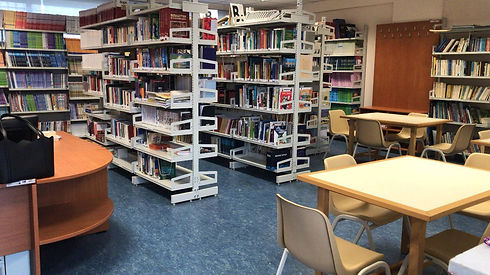

March 2025 - Spain- Basque Country
(Group mobility)
Our school successfully completed its first group mobility activity in Renteria, Basque Country, Spain, from March 14 to March 21, 2025. Fifteen students from the 2nd and 3rd grades participated, accompanied by three staff members, as part of our Erasmus+ KA122 project "Inclusion, Innovation, and Digital Literacy through the School Library."
The visit began in Bilbao, where students explored the Old Town, visited the Bidebarrieta Central Library, engaged in interactive activities at the Guggenheim Museum, and toured the Azkuna Zentroa cultural center. Activities included QR code use, digital poster creation, creative writing, and audiovisual production.
In Renteria, students were warmly welcomed by Egiluze Errenteria Ikastetxea and hosted by local families. They attended lessons, presented their school, and participated in various educational and cultural activities, experiencing Spanish school life firsthand. They also visited key locations such as Pasai San Juan, San Sebastian Aquarium, Monte Urgull, Monte Igeldo, and Hondarribia.
The program aimed to strengthen European identity, intercultural communication, and digital literacy while promoting inclusion. Through active participation, students gained knowledge, developed essential skills, and built confidence.
The journey ended with project presentations and an emotional farewell. Students returned with unforgettable memories, valuable experiences, inspiring images, and wonderful new friendships.
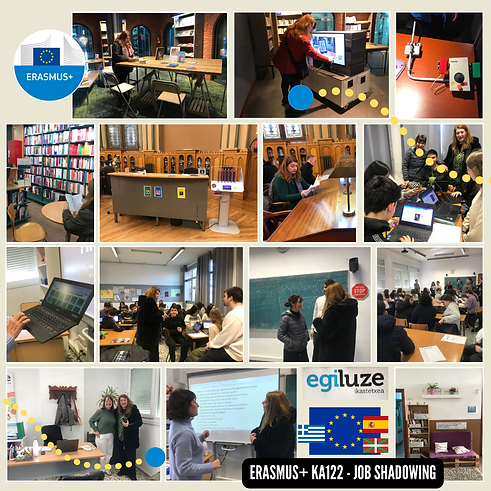
March 2025 - Spain- Basque Country
(Job Shadowing)
The Greek language teacher Ioanna Chatzi successfully completed her job shadowing activity at Egiluze Errenteria Ikastetxea in Renteria, Spain, from March 14 to March 21, 2025. This activity was carried out within the framework of the Erasmus+ KA122 program titled "Inclusion, Innovation, and Digital Literacy through the School Library", implemented by the 8th Gymnasium of Lamia.
During her stay, the teacher followed a rich program of visits to major libraries, including the Bidebarrieta Central Library in Bilbao, the Library of the Azkuna Zentroa Cultural Center, and the Library of the Guggenheim Museum. She also visited cultural sites of interest such as the Guggenheim Museum in Bilbao and the San Telmo Museum in San Sebastián. There, in collaboration with the staff, she observed the organization, operation, accessibility for people with disabilities, and the use of technology. At the same time, by utilizing digital tools, she created interactive educational activities.
At Egiluze Errenteria Ikastetxea, the teacher participated in meetings with the school administration, teachers, and the school library coordinator. She attended History and Spanish language classes, took part in educational activities both inside and outside the school, and conducted a hands-on activity using a digital application at cultural sites in San Sebastián, in collaboration with the school's History teacher. Additionally, she observed the organization and operation of the school library and discussed topics such as the inclusion of students with disabilities, the use of digital tools and innovative teaching methods, as well as school education and working conditions for teachers in the Basque Country, which has an autonomous education system, like other autonomous communities in Spain.
This experience contributed to the professional development of the teacher, enhancing her knowledge in the use of school libraries, the application of digital tools, the promotion of intercultural understanding, and the strengthening of inclusion practices in the educational process.
June
2025
Finland
(Courses and Training)
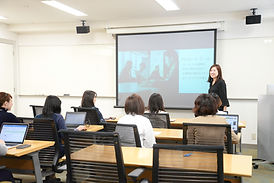
In their upcoming seminar in Finland, four teachers from our school will have the opportunity to learn about innovative educational practices and advanced teaching techniques. They will participate in workshops focused on improving teaching methods, integrating technology into the classroom, and promoting active learning strategies. The seminar will also cover the latest trends in education, such as personalized learning and inclusive teaching practices. By engaging with educators from various European countries, our teachers will exchange ideas, discuss challenges, and gain new perspectives on how to enhance their teaching approaches. This experience will contribute to their professional development and help them bring fresh insights and methodologies back to our school.

June 2025 - Finland
(Training)
From July 7–12, 2025, four teachers from the 8th Gymnasium of Lamia participated in the training course “We are all special: Inclusion and Support for Students with Special Educational Needs Inside and Outside the Classroom” in Helsinki, Finland. The course, organized by Europass Teacher Academy, took place within the Erasmus+ project “Inclusion, Innovation and Digital Literacy through the School Library” (2024-1-EL01-KA122-SCH-000217857), co-funded by the European Union.
The seminar was chosen for its direct relevance to the school’s Erasmus+ priorities and its well-established Inclusion Department staffed by permanent teachers. It also reflects the ongoing effort to enhance the School Library as a dynamic hub for learning, innovation, and creativity. The delegation included Principal Georgia Tsouma (French Language), Ioanna Giannakopoulou (Mathematics), Christina Papakostopoulou (Special Education), and Ioanna Chatzi (Philology).
Throughout the week, participants gained valuable insight into the renowned Finnish educational model—recognized worldwide for its equality, quality, and learner-centered approach. In Finland, every child is seen as a unique individual with distinct strengths and needs. Education policies ensure that all students have equal access to learning opportunities, supported by appropriate resources, counseling, and social care.
A core element of Finnish culture and education is the concept of Sisu—a deeply rooted notion of perseverance, inner strength, and resilience in the face of challenges. This mindset underpins the Finnish attitude toward learning: persistence, emotional balance, and belief in every student’s potential. The course also focused on the Universal Design for Learning (UDL) framework, which promotes flexible learning environments, encouraging participation and success for all learners regardless of background or ability.
Another inspiring aspect was the emphasis placed on school architecture and its role in fostering collaboration, creativity, and well-being. Modern Finnish schools and public spaces, such as the famous Oodi Central Library in Helsinki, are designed as open, welcoming environments that make learning an integral part of community life.
During their visit to Oodi, participants experienced a living example of how Finland links education, culture, and democracy. Far more than a library, Oodi offers thousands of books and digital resources, recording studios, 3D printing labs, collaborative workspaces, and areas for rest and reflection—all freely accessible to everyone. Its symbolic location opposite the Finnish Parliament reflects the nation’s conviction that knowledge, culture, and democracy hold equal value.
This experience enriched the School Library of the 8th Gymnasium of Lamia with new books, translated educational materials, and adapted classroom practices inspired by the Finnish model. Most importantly, it strengthened the teachers’ belief that inclusive education is not only a pedagogical objective but also a daily practice grounded in empathy, cooperation, and respect for diversity.
For additional information, educational resources, and audiovisual material, please visit the school website and our YouTube channel.
June
2025
Finland
(Courses and Training)
In their upcoming seminar in Finland, four teachers from our school will have the opportunity to learn about innovative educational practices and advanced teaching techniques. They will participate in workshops focused on improving teaching methods, integrating technology into the classroom, and promoting active learning strategies. The seminar will also cover the latest trends in education, such as personalized learning and inclusive teaching practices. By engaging with educators from various European countries, our teachers will exchange ideas, discuss challenges, and gain new perspectives on how to enhance their teaching approaches. This experience will contribute to their professional development and help them bring fresh insights and methodologies back to our school.

March 2026- Poland
(Group mobility)
Thirteen students from the 10th and 11th grades of our school returned from Poland with unforgettable experiences after participating in an Erasmus+ learning mobility from 28 February to 6 March 2026. The mobility was part of the Erasmus+ project "Inclusion, Innovation and Digital Literacy through the School Library," co-funded by the European Union.
The students were accompanied by the school principal, Georgia Tsouma, and teachers Kanella Kraniti and Christina Papakostopoulou. This mobility was particularly important as it provided students with fewer opportunities the chance to travel abroad, broaden their horizons, develop new skills, and build self-confidence through international collaboration.
The host institution was Zespół Szkolno-Przedszkolny in Juszczyna, near Żywiec. A highlight of the experience was that our students stayed with Polish host families, allowing them to experience everyday life, local traditions, and Polish hospitality firsthand. During the week, they attended classes alongside their Polish peers in subjects including English, Mathematics, History, Geography, Arts, and Physical Education. They also participated in cultural activities organized by the local cultural association, where they learned about regional customs, music, and traditional dances.
The programme combined academic learning with cultural, historical, and environmental education. Students explored Kraków's historic Old Town and Wawel Castle, visited the UNESCO World Heritage Site of the Wieliczka Salt Mine, and took part in a guided visit to Auschwitz. This powerful experience encouraged reflection on historical memory, human rights, tolerance, and democratic values.
Environmental awareness was another important aspect of the mobility. During a field programme on Mount Żar, students studied local biodiversity and learned about the area's pumped-storage hydroelectric system, gaining a better understanding of renewable energy and sustainable resource management. They also visited Zakopane, walked through the beautiful Kościeliska Valley, admired the panoramic views from Gubałówka, and discovered Poland's rich mountain heritage and ski-jumping tradition. Visits to the traditional Chlebova Chata farm and the Żywiec Brewery Museum further introduced students to the region's cultural heritage, local food traditions, and industrial history.
A central objective of the Erasmus+ project is to promote the modern school library as a space for inclusion, innovation, and digital literacy. During the mobility, students explored three different library environments. At the Main Library of Kraków, they participated in workshops promoting reading, accessibility, and equal access to knowledge. At Arteteka, a modern public library, they experienced how digital technologies, including virtual reality, can support learning and creativity. Finally, at the host school's library in Juszczyna, they took part in library-based educational activities integrated into the school timetable, gaining a deeper understanding of the library's role in everyday school life.
The mobility provided students with valuable opportunities to improve their language, social, and intercultural skills while fostering European citizenship, inclusion, environmental awareness, and digital competence. It was an enriching educational experience that will continue to inspire both students and teachers long after the programme's completion.
For more info and photos click here
June
2025
Finland
(Courses and Training)
In their upcoming seminar in Finland, four teachers from our school will have the opportunity to learn about innovative educational practices and advanced teaching techniques. They will participate in workshops focused on improving teaching methods, integrating technology into the classroom, and promoting active learning strategies. The seminar will also cover the latest trends in education, such as personalized learning and inclusive teaching practices. By engaging with educators from various European countries, our teachers will exchange ideas, discuss challenges, and gain new perspectives on how to enhance their teaching approaches. This experience will contribute to their professional development and help them bring fresh insights and methodologies back to our school.

Iceland- March 2026
(Job Shadowing)
In March 2026, as part of the Erasmus+ project 2024-1-EL01-KA122-SCH-000217857, "Inclusion, Innovation and Digital Literacy through the School Library," designed and implemented by the 8th Gymnasium of Lamia and co-funded by the European Union, two teachers from our school—the principal, Georgia Tsouma, and teacher Kanella Kraniti—participated in a job-shadowing mobility in Iceland. Their host school was Vatnsendaskóli in Kópavogur.
This mobility marked the second stage of a partnership that began when our school welcomed seven Icelandic students and two teachers. During their visit to Iceland, our teachers had the opportunity to observe everyday school life, classroom organization, teaching practices, assessment methods, and approaches to classroom management. The experience provided valuable insights into one of Europe's most highly regarded education systems.
Known as the "Land of Fire and Ice," Iceland offers a unique natural environment shaped by volcanoes, geothermal fields, geysers, waterfalls, and glaciers. This close relationship with nature is strongly reflected in its educational philosophy. Outdoor learning, environmental awareness, and student independence are integral parts of school life, with learning activities frequently taking place outside the classroom regardless of weather conditions.
During the mobility, the participants visited several educational institutions representing different aspects of Icelandic education. At Vatnsendaskóli, a comprehensive school for students aged 6 to 16, they observed an inclusive learning environment where students with disabilities, autism, and learning difficulties are educated alongside their peers. The school's core values—Respect, Friendship, Cooperation, and Creative Work—are evident throughout its daily practices.
The teachers also visited Klettaskóli, Reykjavík's main special school for students with moderate, severe, and multiple disabilities, where individualized learning programmes focus on developing independence and life skills. At Hitt Húsið, a creative youth centre supported by the municipality, they explored how non-formal education encourages young people to develop their talents and helps prevent early school leaving. Another inspiring visit was to Fjölsmiðjan, a non-profit "production school" that supports young people who have struggled in mainstream education due to bullying, behavioural challenges, or other difficulties. Through practical vocational training, the programme successfully helps most participants return to education or enter the labour market.
One of the most striking observations concerned student behaviour management. Rather than relying on traditional punishments such as suspensions or reprimands, Icelandic schools adopt a restorative and supportive approach. When behavioural issues arise, multidisciplinary teams—including teachers, counsellors, and psychologists—work together with the student to identify the underlying causes and encourage personal responsibility and positive behavioural change.
Attendance is approached in a similarly supportive way. Student absences are monitored digitally in real time, not as a disciplinary measure but as an indicator of student well-being. When attendance falls below expected levels, the school initiates communication with families to identify possible causes, such as bullying, emotional difficulties, or family-related challenges, ensuring that support is provided at an early stage.
Inclusion was another key feature of the educational model. At Vatnsendaskóli, differentiated instruction is naturally integrated into mainstream classrooms. Students work on learning activities at different levels according to their needs, while teaching assistants provide discreet support whenever necessary, creating a learning environment where diversity is viewed as a normal and valued part of school life.
The mobility also highlighted the high level of professional trust placed in Icelandic teachers. Educators enjoy considerable autonomy in planning their lessons according to students' interests and needs rather than following a rigid national curriculum. At the same time, structured collaboration among colleagues is embedded within their working hours, promoting professional development, reducing burnout, and enhancing the quality of teaching.
Overall, the job-shadowing experience demonstrated that the strength of the Icelandic education system lies not only in its resources but also in its educational philosophy—one that places inclusion, well-being, trust, collaboration, and respect for every learner at the centre of school life. The knowledge and good practices gained during this mobility will contribute significantly to the ongoing development of our school's Erasmus+ project and its commitment to creating a more inclusive, innovative, and student-centred learning environment.
For more info and photos click here